

Thank You, Readers — You Inspire This Journey
To my amazing readers—thank you!
Your comments, emails, and quiet encouragement inspire me to keep sharing each week. If you haven’t subscribed yet, you’re missing out on stories and lessons that come straight to your inbox. Please take a moment and subscribe here.
Last week, in my article The Five Buckets of Success: Why Knowledge and Skills Come First, I shared Steven Bartlett’s analogy of how success builds layer by layer. Let’s recap briefly.
The Five Buckets That Build Success
In The Diary of a CEO, Steven Bartlett describes five interconnected “buckets” that determine long-term success:
1. What you know — Knowledge
2. What you can do — Skills
3. Who you know — Network
4. What you have — Resources
5. What the world thinks of you — Reputation.
Each bucket pours into the next.
You start by learning (knowledge).
You apply what you know (skills).
With skills, you become valuable—and valuable people attract networks. From networks come resources.
And from those four, your reputation is born.
From Learning to Earning: The Business Connection
Now, let’s return to the journey toward financial freedom through side businesses. If you’ve been wondering, “What exactly makes a business?”—this is where it starts to click.
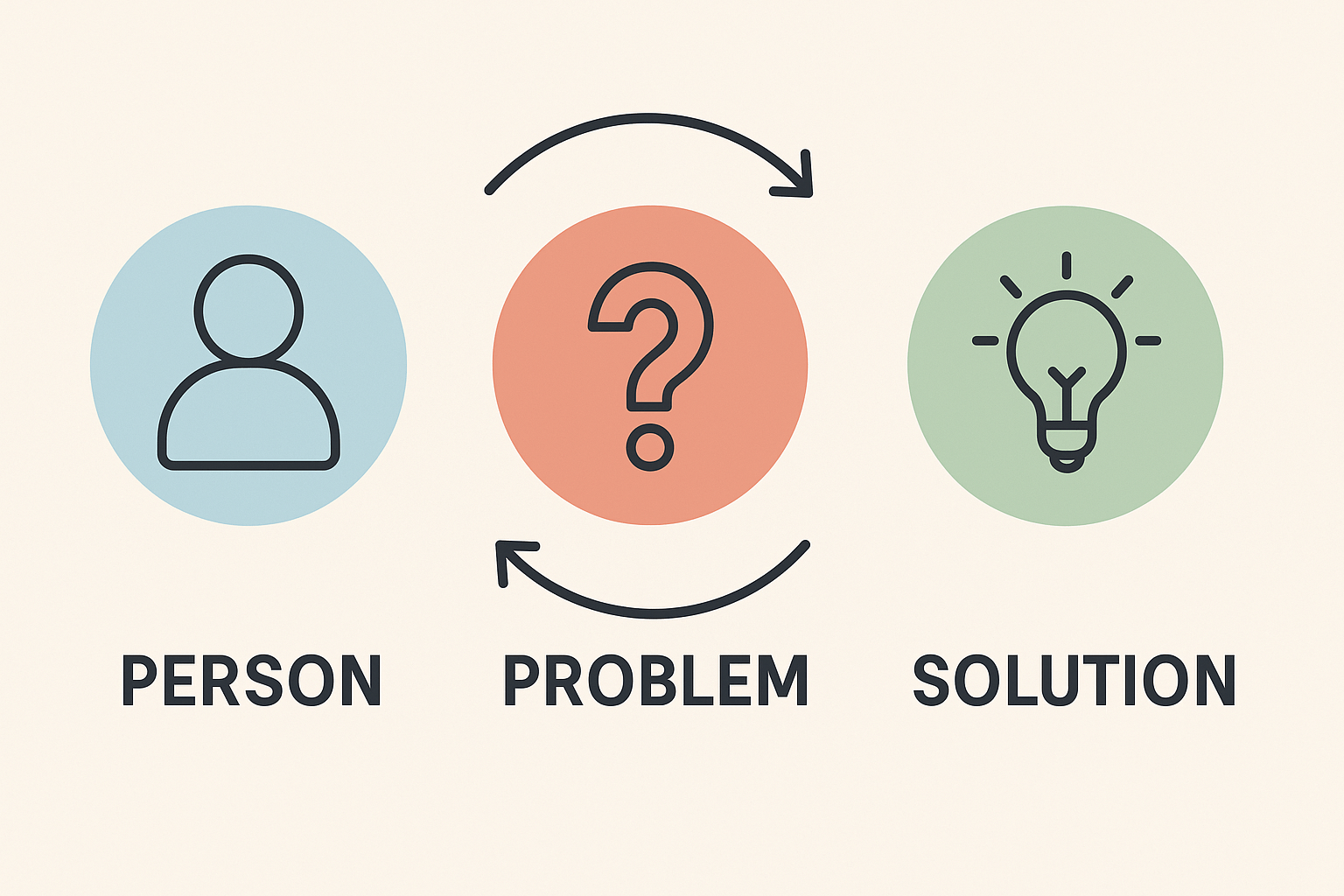
Every business, whether small or global, has three essential components: a Person, a Problem, and a Solution.
Think of it like a formula:
Business = Person + Problem + Solution
You must have:
• A person who faces a problem,
• A problem that truly matters, and
• A solution they’re willing and able to pay for.
In simple economics—there should be demand for the solution and supply of it. But not just demand—effective demand, meaning someone both wants and can afford your solution.
Solving Bigger Problems = Making Bigger Money
Here’s one truth that separates surviving side hustles from thriving businesses:
 The bigger the problem you solve, the more money you make.
Let’s make this real.
• A student printing business in Kikoni or Banda solves a small, individual problem — printing coursework reports. It earns daily cash flow but remains limited.
• A logistics company moving goods from Mbarara to Kampala solves a corporate problem — connecting supply chains. The client pays millions, not thousands.
• A software developer building an invoicing app for a local shop keeper solves a personal problem; but building a digital payment system for microfinance institutions across Uganda solves a national problem — and attracts banks, telcos, and investors.
So, if you want to grow your side business into something scalable, ask: Am I solving an individual’s small pain point—or an organization’s big headache? – The difference is the size of the cheque.
The Three Questions Before You Start
If you’re thinking of starting your side hustle, pause and ask yourself these three questions:
1. Do I genuinely enjoy helping people or companies with this problem? – If not, burnout will come fast.
2. Do I know how to solve it—or can I learn the skills to do so? – Skills amplify ideas.
3. Will the individuals or companies pay for my solution? – A brilliant idea without paying customers is just a hobby.
Let’s make it practical.
A software developer might know how to build an app (skill), but if no one pays for it, that’s not a business.
You might love photography, but if there’s no demand, it’s a passion project, not a business. But if you photograph real estate for agents or create professional headshots for executives, you’ve turned passion into purpose—and purpose into income.
Once you reach financial freedom, you can afford to pursue passion projects without worrying about the bills.
How to Validate Your Business Idea
Here’s how to test your idea before you invest heavily:
1. Identify a real problem — talk to 5–10 potential customers.
2. Test a solution — create a small version (prototype, sample, pilot).
3. Check if they’ll pay — not “would you buy?” but “will you pay now?”
4. Refine your offer — tailor it to what customers truly value.
Remember: You’re not in business until someone pays you.
Final Thoughts: Build Smart, Start Small
Whether you’re a civil servant in Kampala, a banker in Nairobi, or an engineer in Dar-es-Salaam, the formula is the same.
Start with what you know and what you can do—your first two buckets.
Then find who needs it most, what problem they face, and how you can solve it better than anyone else.
Financial freedom isn’t about quitting your job tomorrow. It’s about using your career as a launchpad to build something that eventually gives you choices—and impact.
Until next time,
Believe. Build. Be Bold.
— Dr. Mwesi Leo Career & Business | Productivity Systems | Financial Freedom
 Comment |
  Share |
  Like |
  Subscribe
You May Also Like



Leave Your Comment:
Leave Your Comment:





01 Comment
Namanya Patricia,
11 November, 2025Ok