

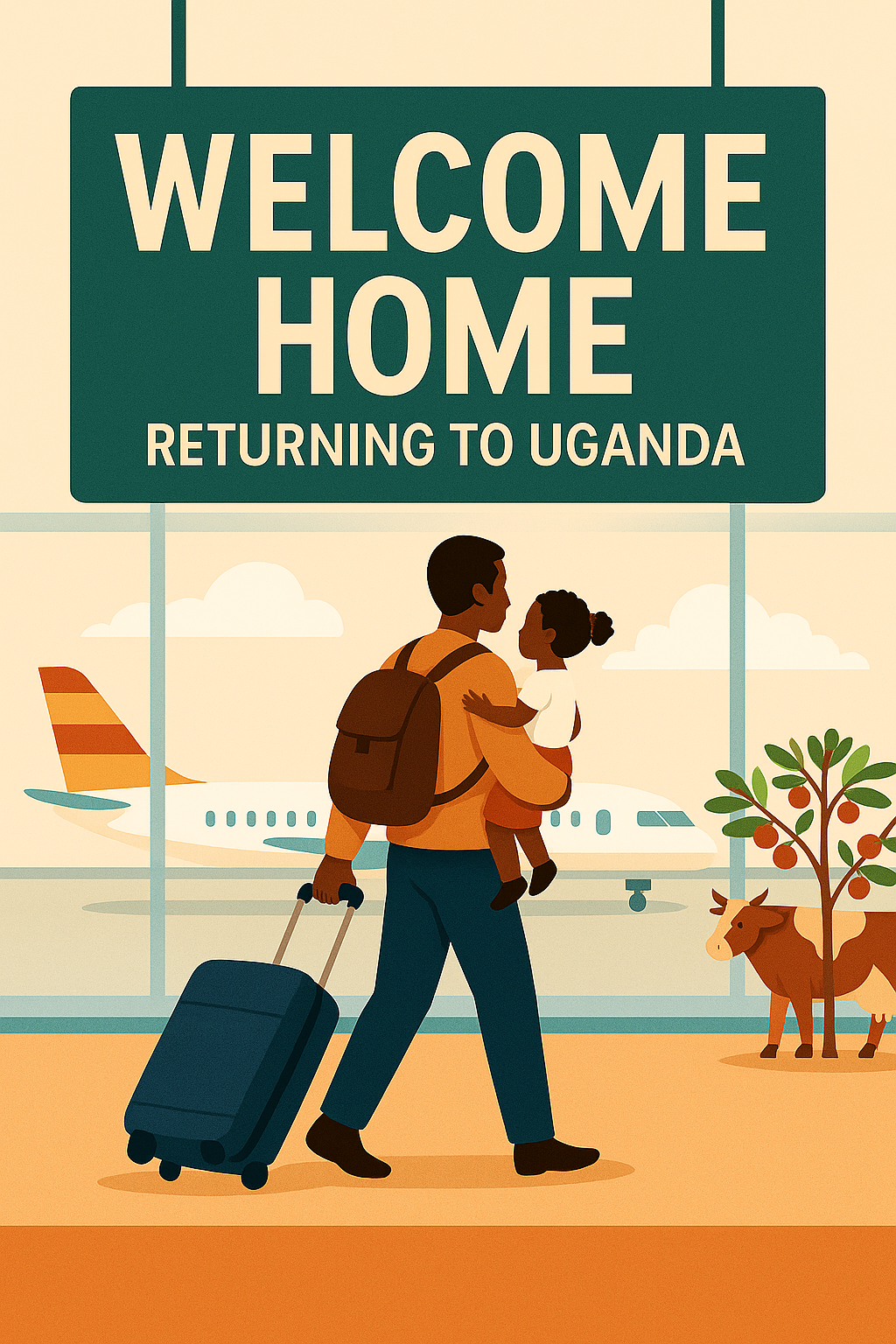
Follow-up to “From Kampala to Canada—and Back: A Call to My Diaspora Brothers and Sisters”
Have you ever known exactly how someone would respond to something you did? That was me last Monday, right after I hit publish on my article calling upon my diaspora brothers and sisters to invest back home.
As I closed my laptop, I could already picture what my buddy Benno (not his real name) in Canada was going to say:
“Man, the crime rate back home is too high for me to invest!”
And—right on cue—he did just that. Moments after reading my piece, Benno sent me a YouTube link about the recent, tragic murder of an elderly couple in Lugonjo-Nakiwogo, Entebbe Municipality. (We’ll come back to that in a moment.)
Benno wasn’t alone. Even my Bestie sent over the same link. Then, on Friday, I got a call from another close friend who lives in Texas, U.S.A. He agreed with almost everything I wrote—except for one thing:
“Honestly bro, it’s the insecurity back home scares me.”
Let’s pause right there.
I had to gently correct him: there’s a difference between crime and insecurity. (Quick Google search, buddy—save me the keystrokes!) After a long chat, this Ugandan-turned-proud-U.S. citizen (congrats again!) admitted, quite surprisingly, that Uganda might actually be safer to live in than some parts of the United States.
 Crime in Uganda vs the United States: Let’s Talk Data
When we talk about crime, we need to deal in facts—not just fear.
According to the Johns Hopkins Bloomberg School of Public Health, someone was killed by a gun in the U.S. every 11 minutes in 2023. The CDC reported 46,728 gun-related deaths, the third-highest total ever recorded. Over half were Black or African American.
The states with the worst gun violence? Texas, Florida, Georgia, California, and New York—coincidentally the states with some of the largest Black populations.
A 2024 Commonwealth Fund report places the U.S. in the 93rd percentile globally for overall firearm deaths. What does that mean?
It means that the U.S. has more gun deaths than 93% of the countries in the world. That’s not just bad—it’s catastrophic.
By comparison, Uganda reported 305 gun-related deaths in 2023 (Uganda Police Crime Report). With a population of 46 million compared to the U.S.’s 340 million, Uganda is about 20 times safer when you look at gun deaths per capita.
Of course, gun ownership laws differ significantly between the two countries, placing the U.S. at a disadvantage compared to Uganda in terms of firearm-related violence. Beyond gun-related deaths, the Uganda Police Annual Crime Report also recorded 4,248 homicide cases in 2023. The most common causes included land disputes, infidelity, mob justice, and personal conflicts. Alarmingly, 25% of these homicides were the result of mob action, often linked to accusations of theft, robbery, or witchcraft.
 The Entebbe Tragedy: What We Know
David Mutaga (69) and his wife Deborah (63), who had recently returned from Switzerland after over 30 years abroad, were tragically murdered in their home. There were no signs of forced entry, no cash stolen, and their phones remained untouched. Investigators suspect a long-standing family dispute over inheritance as the likely motive. In response, police have offered a UGX 50 million reward for information leading to the suspect.
While heartbreaking, this case is a stark reminder that some deaths stem from deep-rooted family conflicts—not random acts of crime. That said, not every dispute ends in tragedy. In fact, if you’ve heard about the growing case backlog in our court system, many of these are inheritance and land-related cases.
 Security & Development Go Hand in Hand
In my previous article, I mentioned the five points President Museveni emphasized during the Parish Development Model (PDM) engagement. Security and crime prevention were top on that list.
Imagine Uganda with enhanced security camera networks, digital enforcement tools, and structured youth employment programs. I believe we’re heading there—and faster if we, the diaspora, step in with smart investments and long-term vision.
Your single act of investing at home can help put a young person to work, keep a family fed, and maybe—just maybe—prevent one more youth from being lured into crime.
 Perception vs. Reality: Time to Rethink
Let’s get real: some of the “insecurity” you hear about Africa is just perception.
And for some strange reason, some folks in North America think Africa is one big war zone.
A war breaks out in Sudan? Suddenly all of Africa is “unsafe.” Really?
If a wildfire in California doesn’t make all of America unlivable, then a conflict in Khartoum shouldn’t make Kampala dangerous.
Yes, Uganda isn’t perfect—but it’s not an isolated case of crime either. And compared to some places abroad, it’s still very safe.
So let’s not let lazy narratives define our view of home.
 You Can Invest Without Boarding a Plane
Here’s the good news: You don’t have to be in Uganda to build in Uganda. There are several investment options available—and I’ll be sharing more about them in upcoming posts, so stay tuned!
For instance, you can open a USD account with any commercial bank in Uganda and invest from wherever you are in the world.
Take Unit Trusts as an example: they’re currently offering 6%+ return on investment (ROI) for dollar-based accounts — outperforming many blue-chip stocks on the Toronto Stock Exchange.
Now, imagine combining that return with impact: Your money earns, and your community grows.
My dear Benno, Bestie, and Texas bro — I hear your concerns. But I also know we can’t let fear define our future.
To those diaspora sisters and brothers reading this, I ask: What’s holding you back from investing back home?
Drop a comment below. Let’s share ideas, challenge assumptions, and grow our home. And if this message resonates, share it with someone who needs to hear it.
I’m late for a meeting — but I’ll be back soon.
Until then— Keep believing. Keep building.
Dr. Mwesi Leo Life | Business | Productivity









Leave Your Comment: