

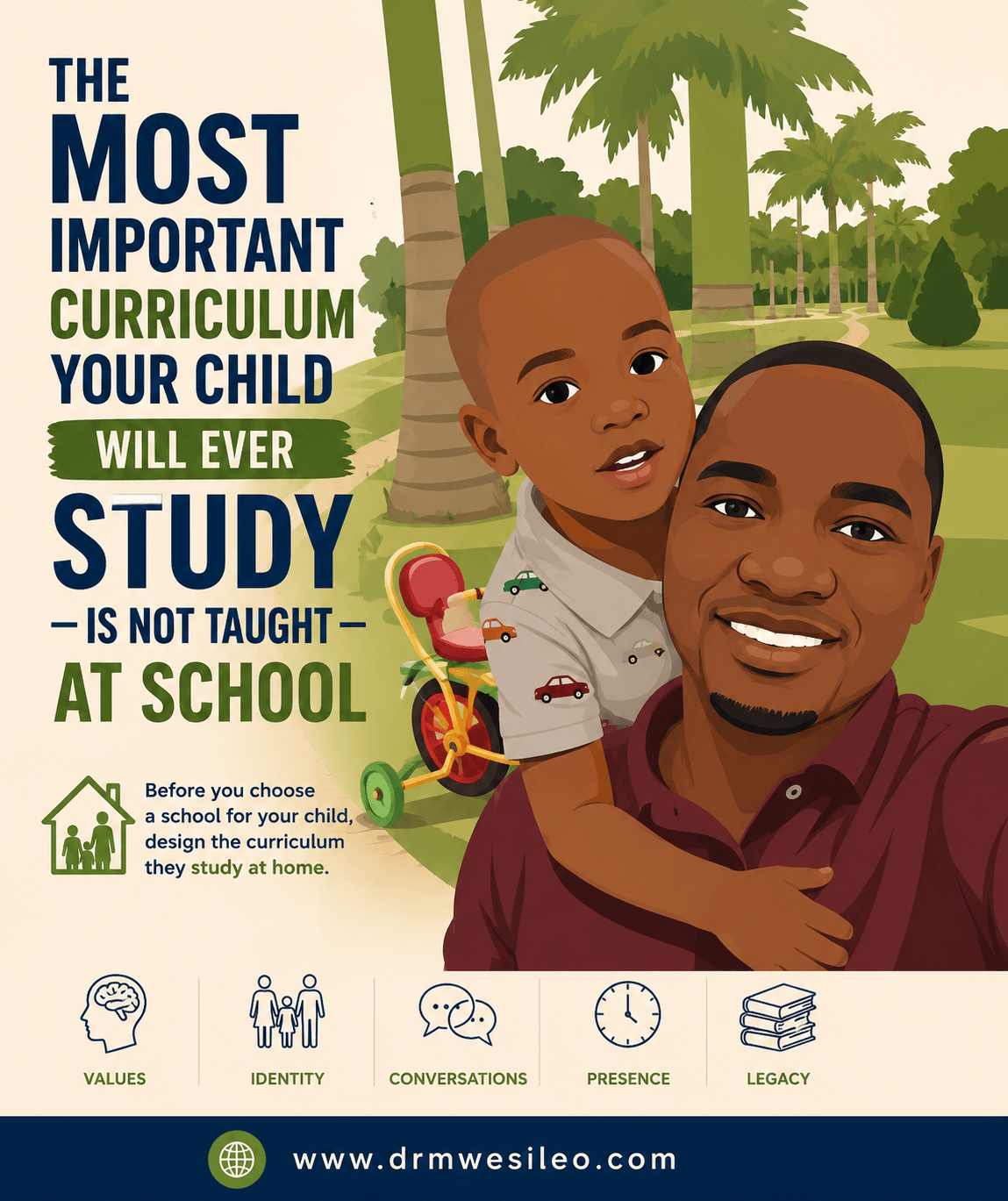
Every evening, there is someone waiting impatiently for me before I even remove my shoes.
My 5-year-old son, Matti.
Sometimes he refuses to go to bed before I get home because he has something important to tell me.
Sometimes it is about what happened at school.
Sometimes it is about a disagreement with his best friend.
Sometimes it is about something he observed while playing in the neighborhood.
And sometimes…
it is simply one of the 200 questions he seems to prepare every day.
“Daddy, why is the moon following our car?”
“Who taught you to drive?”
“Why don’t birds get tired?”
“Why do you love reading books?”
“Where does light come from?”
“Daddy, where does money come from?”
“Why do fish not drown?”
If I pause too long to think of an answer, he has already moved on to another question.
It is exhausting.
It is hilarious.
It is beautiful.
As a parent, there are evenings when I return home mentally drained after a long day at work, only to find a little boy who has spent the whole day preparing questions for me.
There are moments I quietly wish he would slow down.
Then I remind myself of something.
These are not ordinary conversations.
This is education.
Perhaps the most important education he will ever receive.
Because every answer I give, every story I tell, every correction I make, every value I reinforce is quietly shaping how he will understand the world long before he learns algebra, chemistry, or economics.
That realization completely changed how I think about education.
It also changed how I answer one of the most common questions parents ask me.
Should I Take My Child to an International School or a Local School?
Friends and relatives ask me this question all the time.
“Dr. Leo, should I take my child to an international school or a local school?”
Most expect a straightforward answer.
Instead, I usually ask another question.
“Why?”
Why do you believe an international curriculum is the right choice for your child?
The responses are surprisingly predictable.
Out of every 10 parents, 9 begin by mentioning where their friends take their children.
“Most of my friends take their children there.”
“Minister so-and-so’s children study there.”
“My colleagues say it is the best school.”
Very few begin with their own child.
Very few talk about the child’s personality, learning style, family values, or long-term aspirations.
The decision is often driven more by social pressure than by thoughtful parenting.
But I have come to believe that we are asking the wrong first question.
Before asking which school, perhaps we should first ask:
What kind of human being are we trying to raise?
Every Family Has a Curriculum
Whether we realise it or not, every home teaches a curriculum.
Some families design it intentionally.
Others teach it accidentally.
Either way, children graduate from it.
Schools teach mathematics.
Families teach honesty.
Schools teach science.
Families teach character.
Schools teach grammar.
Families teach gratitude.
Schools teach history.
Families teach identity.
Schools teach accounting/economics.
Families teach money and real life value.
Schools teach children how to earn a living.
Families teach them why life is worth living.
That is why I have increasingly become convinced that every parent should intentionally design what I call The Family Curriculum.
Unlike the curriculum taught in school, this one has no ministry-approved syllabus.
No report cards.
No examinations.
Yet it quietly shapes almost everything a child becomes.
What Is in Your Family Curriculum?
If I asked you to write your family’s curriculum today, what would be on it?
Would your children learn where your family came from?
Would they know the sacrifices their grandparents made so they could enjoy the opportunities they have today?
Would they understand how your household earns money?
Would they know why your family values integrity more than quick wealth?
Would they understand why you chose your profession?
Would they know how your family handles conflict?
Failure?
Success?
Generosity?
Would they know what kind of people you hope they become long after you are gone?
These are not subjects taught in classrooms.
These are lessons taught around dinner tables, during evening walks, while washing the car together, travelling to the village, visiting grandparents, tendering to cows together or simply answering 200 curious questions before bedtime.
No school on earth can teach these lessons better than parents.
The Gift of Presence
One thought often stays with me.
If I sometimes struggle to keep up with one curious 5-year-old, I wonder about another little boy or girl who left home for boarding school at the age of 5.
Yes, they exist.
Many parents know them.
Some schools now have boarding sections for children barely out of infancy.
I do not raise this to criticise boarding schools.
I raise it to ask a different question.
When one adult is responsible for dozens of young children, who teaches the family curriculum?
Who patiently answers the endless questions?
Who explains why kindness matters?
Who tells the stories of grandparents/elders?
Who passes on family traditions?
Who corrects misunderstandings before they become beliefs?
Children do not stop learning because they have left home.
They simply begin learning from someone else.
And that is why parents should never outsource the responsibility of raising their children, even when they outsource part of their education.
As I reflected on this article, I could not help but think about one of my closest friends, C.K., who, a few weeks ago, unknowingly ignited this entire conversation. During one of our long discussions on parenting and education, she passionately shared why she had intentionally chosen to be physically present during the foundational years of raising her daughters.
She admitted that it is not always easy. Parenting is demanding. It requires sacrifice, patience, and countless decisions that often go unnoticed by the world.
I remember telling her something I genuinely believe: this is one investment whose returns may not be visible immediately, but they compound over a lifetime. One day, those little girls may never fully appreciate the sleepless nights, the bedtime stories, the endless questions answered, or the countless moments their mother simply chose to be present. But those moments are quietly becoming part of their Family Curriculum, shaping the women they will one day become.
So, C.K., thank you, not only for inspiring this article but also for faithfully sharing every article I write with your friends and family. I appreciate you more than you know. Please keep sharing them. Conversations like these deserve to travel far beyond our own circles.
And to everyone reading this, if this article speaks to you, don’t keep it to yourself. Share it with another parent. Post it on your WhatsApp status. Send it to your family group. Start a conversation at work, in your church, in your community, or around your own dining table. If together we can encourage even one more parent to intentionally design their Family Curriculum, then this article will have served its purpose.
The Curriculum No One Else Can Teach
Technology has transformed education.
Today, a child sitting under a coffee tree in Kyanamukaka can access lectures from Harvard, Oxford, Toronto or the Massachusetts Institute of Technology, just to mention.
Knowledge has become remarkably accessible.
Artificial intelligence can explain calculus.
YouTube can teach coding.
Online platforms can teach almost any skill imaginable.
But there is one curriculum that no university, no teacher, no artificial intelligence, and no internet connection can ever provide.
The curriculum of family.
Only parents can teach what it means to belong to your family.
Only parents can explain the values that built your household.
Only parents can shape the identity they hope their children will carry into the future.
A Different Question
So perhaps the next time someone asks whether they should choose an international curriculum or a local curriculum, we should gently ask a different question first.
What curriculum is your child studying when they come home?
Because long after children forget who taught them mathematics, they will still remember who taught them how to live.
And in my view, that will always be the most important curriculum of all.
Coming Next…
In the second article in this series, I will explore an even more difficult question: Should You Choose International Curriculum or Local Curriculum for your child?
Until next time,
Believe. Build. Be Bold.
— Dr. Mwesi Leo
 Career & Business | Productivity Systems | Financial Freedom







Leave Your Comment: